Experts Warn That How Children Use Screens May Matter As Much As How Long They Use Them
Screens have become an everyday part of childhood.
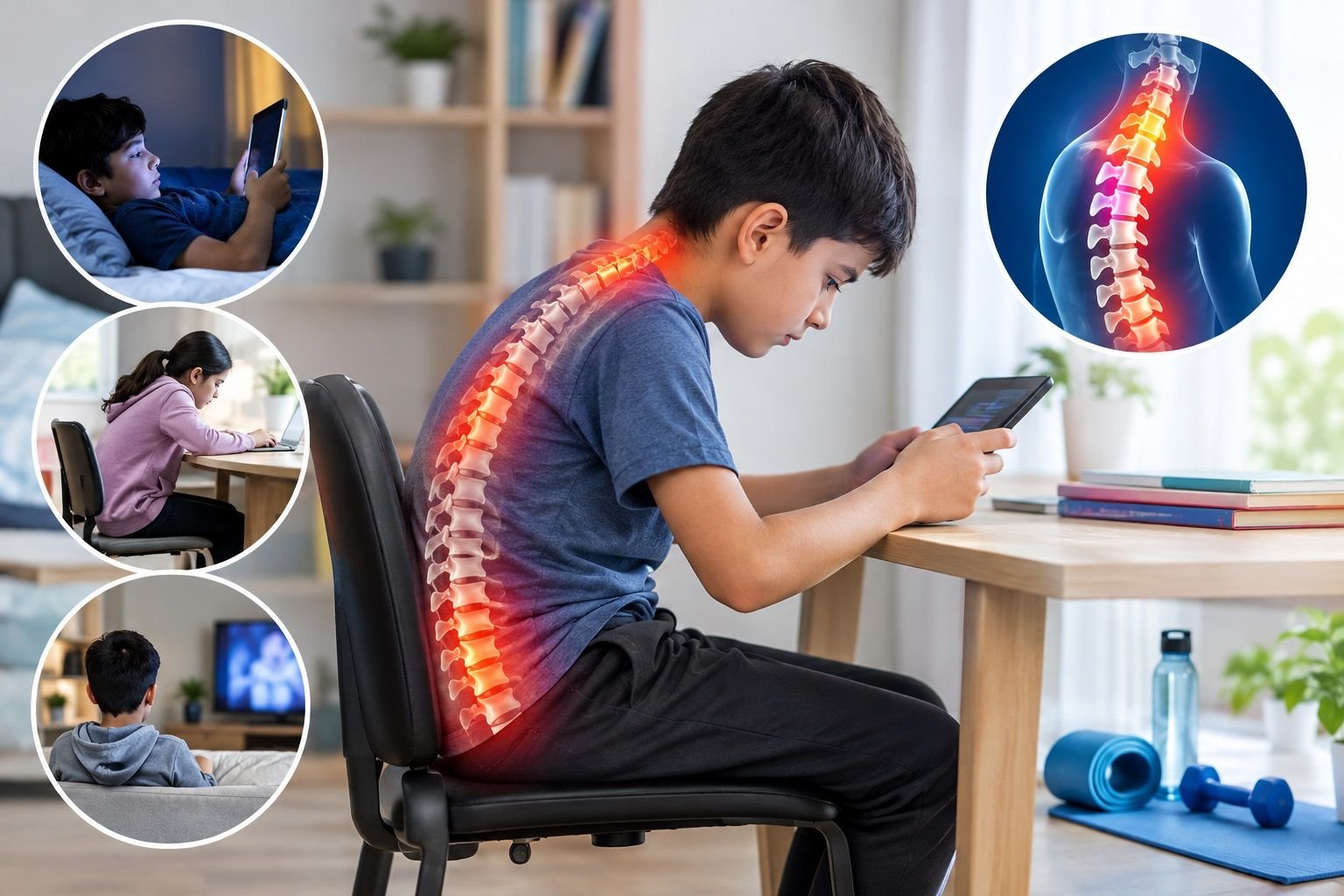
From online classes and homework to smartphones, gaming and social media, children and adolescents can spend long periods sitting in one position. Physiotherapy experts are now raising concerns that prolonged sitting, reduced movement and poor posture during screen use could contribute to back, neck and other spinal problems.
Experts from the Indian Association of Physiotherapists highlighted the issue at the World Physiotherapy Asia Western Pacific Regional Conference 2026 in Delhi. The conference brought together more than 10,000 physiotherapy professionals and delegates from 32 countries.
The Problem May Not Be Screen Time Alone
Experts emphasised that the concern is not simply the number of hours a child spends looking at a screen.
What happens physically during those hours may be equally important.
Children may remain seated for long periods, hold static positions, reduce their overall movement and repeatedly look down at smartphones. These habits can place repeated stress on the neck and back.
This does not mean that screen time has been proven to directly cause back pain. Instead, current evidence points to associations between sedentary behaviour, certain screen use patterns and musculoskeletal symptoms.
Prolonged Sitting Can Reduce Movement
Children can remain physically still for extended periods while being mentally engaged with digital content.
Long periods of static sitting may mean fewer opportunities to change position, stretch and use different muscle groups.
According to the experts, regular movement should therefore become part of children’s study and screen routines rather than something reserved only for sports or exercise sessions.
Neck Health Is Also A Concern
The issue extends beyond the lower back.
Frequently looking down at a smartphone can alter the position of the head and neck. Research involving children aged five to 12 years has found associations between smartphone use and changes in head and neck flexion and craniocervical posture, particularly while sitting.
Other evidence has also found a mild association between sedentary behaviour and neck pain among children and adolescents.
This makes posture particularly relevant as smartphones and tablets become increasingly integrated into everyday life.
What Does The Research Show?
The evidence is still developing.
A systematic review and meta analysis has reported an association between sedentary behaviour and spinal pain among children and adolescents.
Another study involving 970 school aged children found associations between overall screen time, passive gaming and social media use and neck and shoulder pain at one follow up point.
However, experts caution against interpreting these findings as proof that screen time alone causes spinal pain.
Children’s physical activity, posture, sitting habits, environment and other factors can all influence musculoskeletal health.
Technology Is Not The Enemy
Experts are not calling for technology to be removed from children’s lives.
Digital devices are now part of education, communication and recreation.
The focus instead is on helping children develop healthier ways to use them.
Dr Ruchi Varshney, Organising Secretary of the WPAWP 2026 conference, emphasised the importance of changing positions, taking movement breaks, using appropriate seating and keeping children physically active.
The goal is to make technology compatible with healthy movement rather than allowing prolonged screen use to replace physical activity.
Simple Changes Can Make A Difference
Parents and schools can encourage several practical habits during study and screen sessions.
Take Regular Movement Breaks
Children should avoid remaining in the same position for prolonged periods. Short movement breaks can provide opportunities to stand, walk and change posture.
Encourage Age Appropriate Physical Activity
Daily physical activity should remain an important part of childhood even when children have substantial academic or digital commitments.
Improve Seating And Screen Position
An appropriate chair and study setup can help children maintain a more comfortable posture.
Screens should also be positioned in a way that reduces the need to repeatedly bend the neck downward.
Avoid Prolonged Neck Down Smartphone Use
Holding a phone low for long periods can encourage sustained neck flexion. Children should be encouraged to change position regularly rather than remaining in one posture.
These recommendations were specifically highlighted by physiotherapy experts at the conference.
Schools Have An Important Role
Children spend a substantial portion of their day in educational environments.
Schools can therefore support spinal health by incorporating movement breaks into long study sessions, promoting appropriate seating and teaching students basic posture awareness.
This becomes increasingly relevant as digital learning and computer based academic work become more common.
Parents Can Focus On Habits, Not Just Hours
A simple focus on reducing the number of screen hours may overlook an important part of the problem.
Two children could spend the same amount of time using a device but have very different physical habits.
One may sit continuously in the same position, while another may regularly stand, move around and change posture.
This is why experts are encouraging parents to look at how children use technology, not just how long they use it.
When Should Parents Seek Professional Assessment?
Occasional discomfort does not necessarily indicate a serious spinal condition.
However, experts recommend early assessment when pain becomes recurrent or persistent.
Early attention can help identify whether symptoms are related to posture, activity, musculoskeletal problems or another underlying issue.
Parents should avoid assuming that recurring back or neck pain is simply a normal consequence of growing up.
Prevention Starts In Childhood
Childhood provides an opportunity to establish healthy movement patterns before poor habits become routine.
Teaching children to change positions, stay active and maintain comfortable posture can help build awareness that may continue into adolescence and adulthood.
As Dr Varshney noted, childhood is an important period for developing healthy movement habits rather than waiting until musculoskeletal problems become established.
The Bigger Picture
The growing use of digital devices is changing how children study, communicate and spend their leisure time.
The challenge is not necessarily to eliminate technology but to create a healthier balance between screen use and movement.
Regular physical activity, ergonomic awareness and preventive physiotherapy can all contribute to this balance.