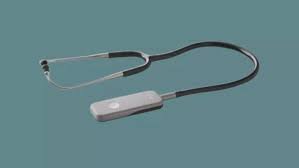
For more than 200 years, the stethoscope has been a doctor’s most trusted tool—helping us listen to the heart and lungs, detect subtle changes, and make life-saving decisions. But apart from cosmetic updates, this 19th-century invention hasn’t changed much. Now, thanks to artificial intelligence (AI), the humble stethoscope is being reimagined into a tool that can diagnose three major heart conditions in just 15 seconds.
Developed by Eko Health (US-based) and tested by Imperial College London and NHS Trust researchers, this AI-powered stethoscope combines traditional auscultation with modern computing power.
How It Works
- The device uses a microphone to capture sounds from the heart that are inaudible to the human ear.
- Simultaneously, it records a quick ECG (electrocardiogram) by detecting the heart’s electrical signals.
- Data is securely uploaded to the cloud, where algorithms trained on thousands of patient records analyze it.
- Within 15 seconds, results are sent to a smartphone, flagging risks of:
- Heart failure
- Atrial fibrillation (AFib)—irregular heartbeat that raises stroke risk
- Heart valve disease
The Evidence
The technology was tested in the TRICORDER study, which included 200 GP surgeries across London and 12,700 patients with symptoms like fatigue, swelling, and breathlessness.
Results:
- Patients examined with the AI stethoscope were:
- 2.3x more likely to be diagnosed with heart failure
- 3.5x more likely to be diagnosed with atrial fibrillation
- Nearly 2x more likely to be diagnosed with valve disease
- This means diseases that are often missed in early stages were caught in primary care settings before emergencies happened.
Why This Matters for India
India has one of the highest burdens of heart disease globally. Many patients are only diagnosed when hospitalized with advanced symptoms.
- Early detection using AI tools can help doctors start treatment before conditions worsen.
- Rural and semi-urban doctors could especially benefit, as access to cardiologists and advanced imaging is often limited.
- With smartphones and cloud-based systems already widespread, such devices can integrate into primary care networks across India.
Challenges to Adoption
- Workflow Integration: In the UK, 70% of GP clinics that received the device stopped using it regularly after a year. Training and ease-of-use need improvement.
- False Positives: About two-thirds of patients flagged for heart failure didn’t actually have it. While this can cause unnecessary anxiety, researchers argue it’s still better than missing high-risk cases.
- Costs & Access: For widespread adoption in India, affordability and accessibility will be key.
Learnings for Doctors
- Stay open to AI-enabled tools—they are not replacing doctors but amplifying diagnostic accuracy.
- Use these devices as screening aids, not as final decision-makers.
- Combine AI results with clinical judgment for the best outcomes.
- Educate patients that technology helps detect problems early, but doctor-led interpretation remains vital.
At The Doctorpreneur Academy, doctors are already exploring how digital and AI-based tools can strengthen their practice:
- Skill-Building: Learning to adapt to AI-assisted devices while ensuring human expertise stays central.
- Patient Education: Using digital platforms to explain how new tools like AI stethoscopes can improve care.
- Innovation Mindset: Positioning themselves as future-ready doctors, ready to embrace technology and set examples in preventive cardiology.
- Networking & Collaboration: Sharing insights with peers and exploring how to bring such devices into clinics in India.
Conclusion
The AI stethoscope represents a historic upgrade to one of medicine’s most iconic tools. While challenges remain in adoption, its potential to revolutionize the early diagnosis of heart conditions is undeniable.
Doctors at The Doctorpreneur Academy are leading this transformation—embracing innovation, educating patients, and preparing for a future where AI works hand-in-hand with medical expertise.
💡The stethoscope may have been invented in 1816—but in 2025, it just got its smartest upgrade yet.
👉To register for our next masterclass, please click here: https://linktr.ee/docpreneur