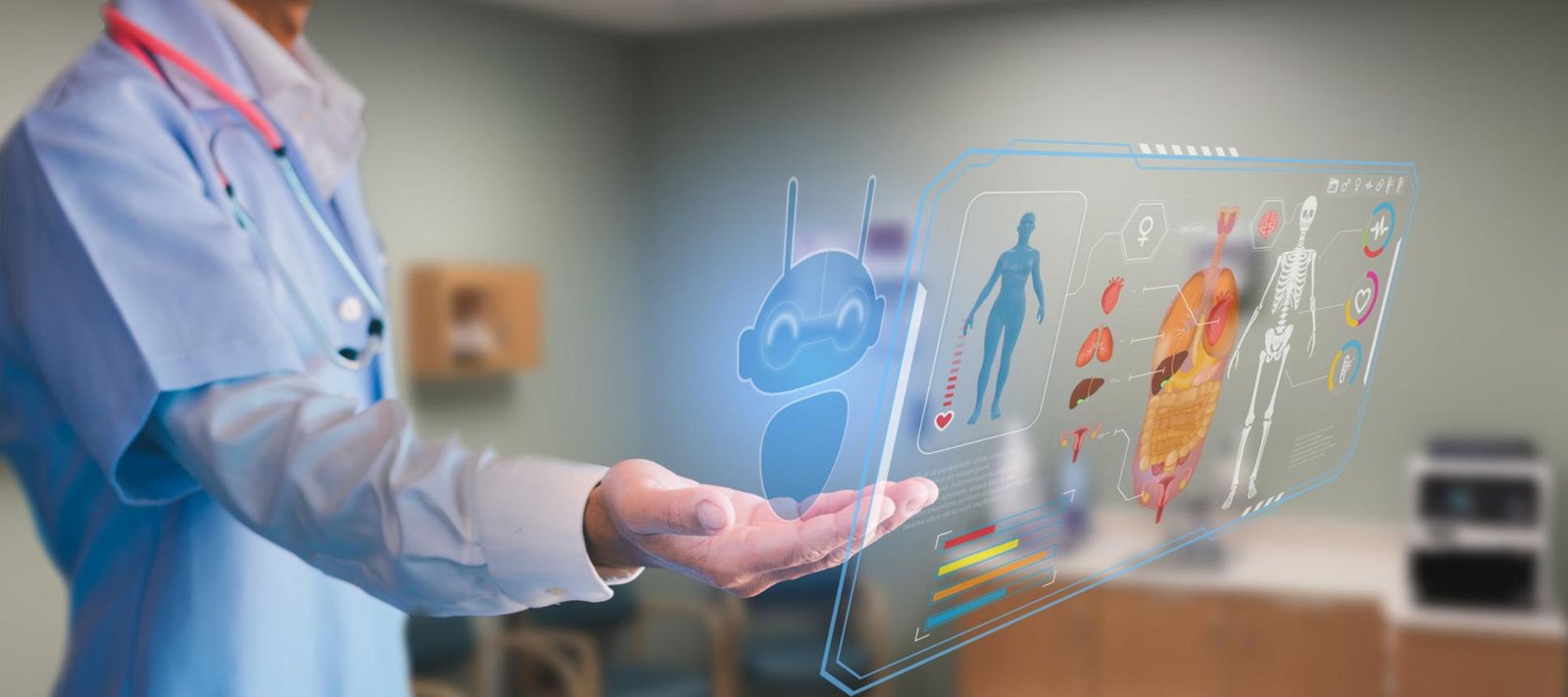
Artificial Intelligence is rapidly transforming healthcare from a technology of the future into a critical component of modern medicine. Across hospitals, diagnostic centers, research institutions, and patient care settings, AI is helping healthcare professionals make faster decisions, improve accuracy, and deliver more personalized care.
As healthcare systems face increasing patient loads, rising costs, and growing demands for efficiency, AI is emerging as a powerful tool capable of reshaping the way medicine is practiced. Recent developments demonstrate that AI is no longer limited to administrative functions but is now actively supporting clinical decision making, diagnostics, treatment planning, and patient engagement.
A New Era of Intelligent Healthcare
The healthcare industry generates enormous volumes of data every day, including medical records, laboratory reports, imaging scans, prescriptions, and patient histories. Traditionally, analyzing such vast amounts of information required significant time and human effort.
AI is changing this landscape by enabling healthcare professionals to process and interpret complex datasets more efficiently. Advanced algorithms can identify patterns, detect abnormalities, and generate insights that support more informed clinical decisions.
This shift is helping healthcare providers move toward a more proactive, data driven approach to patient care.
Transforming Medical Diagnostics
One of the most impactful applications of AI is in diagnostics.
AI powered systems can analyze medical images such as X rays, CT scans, MRIs, and pathology slides with remarkable speed and precision. These technologies assist clinicians in identifying diseases at earlier stages and can help reduce diagnostic delays.
In areas such as oncology, cardiology, neurology, and ophthalmology, AI tools are increasingly supporting specialists by highlighting subtle findings that may otherwise be difficult to detect.
Rather than replacing physicians, AI serves as a valuable second layer of analysis that enhances clinical confidence and accuracy.
Improving Clinical Decision Making
Modern healthcare often requires physicians to evaluate large amounts of information before determining the most appropriate treatment plan.
AI systems can assist by:
- Reviewing patient histories
- Analyzing laboratory results
- Identifying potential risks
- Suggesting evidence based treatment options
- Predicting disease progression
These capabilities enable clinicians to make faster and more informed decisions while maintaining focus on patient centered care.
Accelerating Drug Discovery and Research
The pharmaceutical industry is also benefiting from AI driven innovation.
Traditional drug development can take years and require substantial investment. AI is helping researchers identify promising drug candidates more efficiently by analyzing biological data, predicting molecular interactions, and accelerating clinical research processes.
This has the potential to shorten development timelines and bring new therapies to patients faster.
Enhancing Personalized Medicine
Every patient is unique, and healthcare is increasingly moving toward personalized treatment strategies.
AI can analyze genetic information, lifestyle factors, medical histories, and treatment responses to help create individualized care plans. This approach enables healthcare providers to deliver more targeted interventions that may improve outcomes and reduce unnecessary treatments.
Personalized medicine represents one of the most promising frontiers in modern healthcare, and AI is playing a central role in its advancement.
Streamlining Hospital Operations
Beyond clinical applications, AI is helping hospitals improve operational efficiency.
Healthcare organizations are utilizing AI for:
- Appointment scheduling
- Resource allocation
- Patient flow management
- Bed occupancy planning
- Supply chain optimization
- Administrative automation
These improvements reduce operational burdens and allow healthcare professionals to spend more time focusing on patient care.
Strengthening Patient Engagement
AI powered virtual assistants and digital health platforms are creating new ways for patients to interact with healthcare providers.
These technologies can:
- Answer common health queries
- Send medication reminders
- Schedule appointments
- Monitor chronic conditions
- Support remote patient care
Such innovations improve accessibility while empowering patients to take a more active role in managing their health.
Challenges and Ethical Considerations
Despite its tremendous potential, AI adoption in healthcare is not without challenges.
Key concerns include:
- Data privacy and security
- Algorithm transparency
- Regulatory oversight
- Bias in AI models
- Integration with existing healthcare systems
Healthcare leaders emphasize that AI should complement clinical expertise rather than replace human judgment. Responsible implementation, continuous monitoring, and ethical governance will remain essential as adoption expands.
The Future of AI in Medicine
Experts believe that AI will continue to evolve as an indispensable partner in healthcare delivery. Future applications may include advanced predictive analytics, real time disease surveillance, precision treatment planning, and highly personalized patient experiences.
As technology becomes more sophisticated, healthcare systems will likely become increasingly connected, intelligent, and responsive to patient needs.