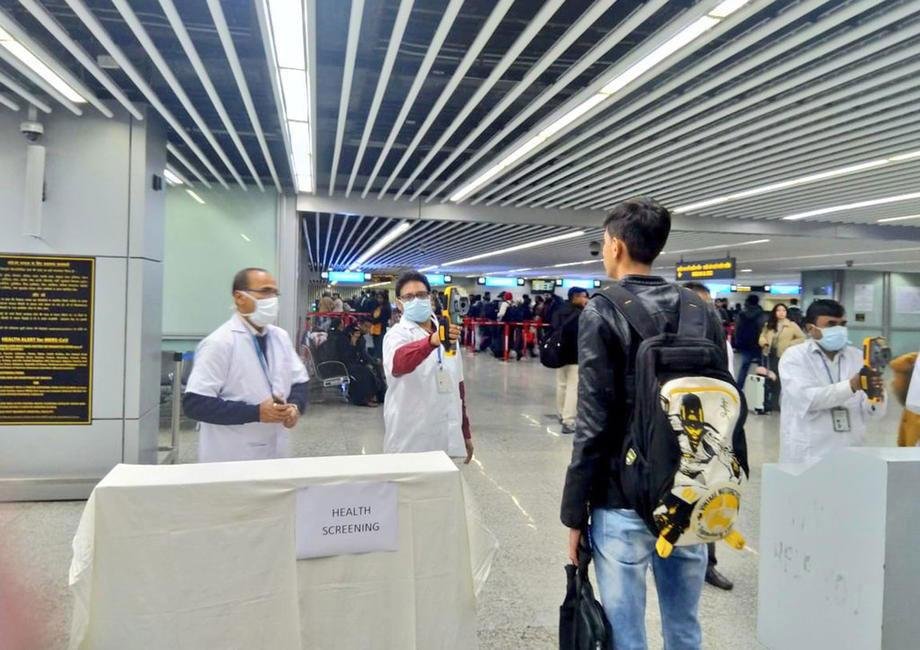
In response to the ongoing Ebola outbreak in parts of Africa, the Government of India has launched Air Suvidha 2.0, an upgraded digital health screening platform designed to strengthen disease surveillance at international airports. Developed by the Ministry of Civil Aviation in collaboration with Delhi International Airport Limited (DIAL) and the Directorate General of Health Services (DGHS), the portal enables faster identification of travellers who may pose a public health risk while ensuring a seamless arrival experience.
The initiative reflects India’s proactive approach to preventing the importation of infectious diseases through international travel and enhancing preparedness at points of entry.
Why Air Suvidha 2.0 Was Introduced
The launch follows the World Health Organization’s declaration of the Bundibugyo Ebola virus disease outbreak in the Democratic Republic of the Congo and Uganda as a Public Health Emergency of International Concern (PHEIC). With global air travel increasing the risk of cross border disease transmission, India has intensified its surveillance measures to safeguard public health.
Air Suvidha 2.0 is intended to support early detection of at risk travellers before they enter the country, allowing health authorities to respond quickly when necessary.
How the New System Works
The upgraded portal introduces a completely paperless and contactless health declaration process for international arrivals.
Passengers are required to submit an online Health Self Declaration Form (SDF) up to 24 hours before arriving in India. The declaration includes:
- Twenty one day travel history
- Exposure to Ebola affected regions or individuals
- Any symptoms related to Ebola infection
Travellers are encouraged to complete the form before boarding or during web check in. Upon arrival, they only need to present the downloaded declaration at the International Travel Health Desk or Immigration counter, significantly reducing paperwork and processing time.
Real Time Coordination Across Agencies
One of the major improvements in Air Suvidha 2.0 is its ability to facilitate real time information sharing among multiple government agencies.
The portal connects data with:
- Airport Health Officers
- Bureau of Immigration
- Integrated Disease Surveillance Programme (IDSP)
- State Surveillance Officers
This coordinated approach enables rapid risk assessment, timely medical evaluation, and immediate referral of travellers requiring further investigation.
Strengthening Public Health Preparedness
Air Suvidha 2.0 is part of a broader national preparedness strategy aimed at preventing infectious disease outbreaks from entering the country.
Earlier, the Ministry of Health and Family Welfare had already strengthened airport surveillance, issued travel advisories, circulated standard operating procedures, and enhanced laboratory and hospital preparedness in response to the Ebola situation. The upgraded portal adds another layer of protection by improving traveller screening and digital surveillance.
Benefits for Travellers
While the system primarily focuses on public health protection, it also offers several advantages for international passengers.
The digital platform helps:
- Reduce waiting time during arrival
- Eliminate paper based documentation
- Enable faster immigration clearance
- Simplify health declaration procedures
- Improve passenger convenience
By allowing forms to be completed before travel, the process becomes more efficient while maintaining strict health surveillance standards.
The Role of Digital Health in Disease Surveillance
The introduction of Air Suvidha 2.0 highlights the growing role of digital technologies in public health.
Digital platforms enable authorities to collect, analyze, and share health information quickly, allowing faster identification of potential health threats. During international outbreaks, such systems help strengthen disease surveillance while minimizing disruption to air travel.
The use of real time data also supports quicker decision making and better coordination among healthcare, aviation, and immigration authorities.
A Proactive Response to Global Health Risks
Although India has not reported any cases of Bundibugyo Ebola virus disease, health authorities continue to maintain a high level of preparedness. Enhanced airport screening, travel advisories, hospital readiness, and digital surveillance demonstrate the country’s commitment to preventing imported infections and protecting public health.
Such preventive measures are particularly important in an era of increasing global travel, where infectious diseases can spread rapidly across international borders.
The launch of Air Suvidha 2.0 represents an important advancement in India’s public health surveillance system. By combining digital health declarations, real time data sharing, and coordinated screening at international airports, the platform strengthens the country’s ability to detect and respond to potential Ebola cases while ensuring a smooth travel experience for passengers.
As global health challenges continue to evolve, initiatives such as Air Suvidha 2.0 demonstrate the importance of technology driven preparedness, early detection, and interagency collaboration in protecting both travellers and the wider community.