France Has Already Committed €13.4 Million
Between January and July 2026, France allocated €13.4 million, approximately $15.1 million, to Ebola response efforts in Congo.
The country’s support has included humanitarian assistance, medical research and the PRISM programme, which was launched during French President Emmanuel Macron’s 2023 visit to the region.
Barrot said he would propose additional humanitarian funding during upcoming French budget discussions, signalling a continued commitment to the international response.
Why Resurgence Remains a Concern
Ebola can spread rapidly when surveillance, case detection and community response weaken.
The current outbreak is caused by the Bundibugyo virus, a strain for which there is currently no specifically approved vaccine or treatment. The World Health Organization reported that by September 7, Congo had recorded 6,757 confirmed cases and 3,267 deaths, with transmission continuing across multiple health zones.
More recent reporting shows that the outbreak has continued to expand. By early October, government data cited by Reuters reported more than 8,300 confirmed cases and 4,000 deaths across seven provinces.
These figures underline why health authorities are concerned about losing momentum in containment efforts.
Eastern Congo Remains at the Centre of the Response
Barrot’s visit to Bunia comes as eastern Congo continues to face major public health and humanitarian challenges.
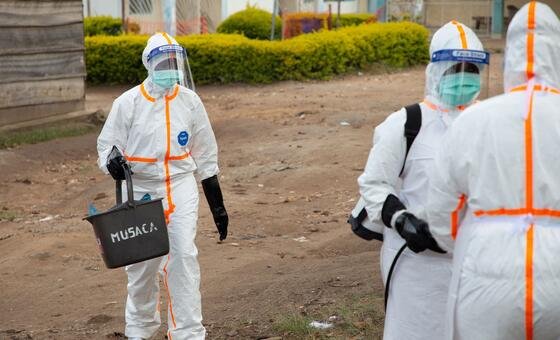
Conflict, insecurity, population movement and limited access to healthcare can make disease surveillance and treatment considerably more difficult. In some areas, healthcare workers must operate under challenging conditions while trying to identify cases, trace contacts and provide care.
Recent reports have also documented new cases in areas controlled by armed groups, adding another layer of complexity to the response.
Community Trust Is Critical
Containing Ebola requires more than medical facilities and funding.
Community trust plays a central role in whether people report symptoms, accept testing, cooperate with contact tracing and seek treatment early. Misinformation and fear can delay care and make transmission chains harder to interrupt.
Recent reporting from eastern Congo has highlighted mistrust among some communities, attacks on health workers and difficulties accessing treatment facilities. These challenges demonstrate why outbreak funding must support not only clinical care but also community engagement and local health systems.
International Support Remains Essential
France’s decision comes as other international partners continue supporting the response.
The United States announced an additional $242 million for the Ebola response in August, bringing its total direct assistance to $512 million. International organisations, humanitarian agencies and Congolese health authorities are also involved in surveillance, treatment and research activities.
Such international cooperation is particularly important when an outbreak places sustained pressure on healthcare infrastructure and requires specialised expertise and supplies.
Research Could Help Fill Treatment Gaps
The absence of an approved vaccine or treatment specifically targeting Bundibugyo virus has increased the importance of research during the current outbreak.
Clinical studies are examining potential interventions, while health authorities continue using available outbreak response tools and monitoring their effectiveness.
Researchers and healthcare organisations are also working to improve early detection and understand transmission patterns. These efforts could generate valuable evidence for future outbreaks involving the same virus.
The Risk Extends Beyond Ebola
The outbreak is also occurring alongside other infectious disease concerns.
During his visit to Bunia, Barrot noted that a laboratory confirmed case of mpox had been identified there in mid September. The combination of multiple infectious disease threats places additional pressure on already stretched healthcare systems.
This makes integrated disease surveillance increasingly important, particularly in regions where health infrastructure and access to medical services are limited.
France Calls for Vigilance, Not Panic
Barrot emphasised that the priority should be controlling Ebola where it emerges rather than creating unnecessary fear about international spread.
The message is particularly relevant because imported cases can attract global attention, while the most effective public health response often begins with strong surveillance, rapid diagnosis, isolation, treatment and community engagement at the outbreak source.
What This Means for Global Health
The current Ebola crisis demonstrates how quickly a local outbreak can become a major international health concern when detection, healthcare access and containment are challenged.
France’s decision to increase funding reflects a broader lesson in outbreak preparedness: sustained investment is often more effective than waiting until an epidemic reaches a critical stage.
For healthcare systems, this means maintaining disease surveillance, protecting frontline workers, strengthening laboratories, supporting communities and ensuring that emergency response capacity remains available even when case numbers begin to fall.