From robotic surgery to remote diagnostics, India is entering a new phase where robotics could become a healthcare tool across multiple medical specialities.
Robotic technology is increasingly moving beyond the operating room. According to Union Minister of State for Science and Technology Dr Jitendra Singh, robotics could become an important tool across medicine, covering diagnostics, treatment and therapy.
Speaking at the International Conference of the Society of Robotic Surgery in New Delhi, Singh highlighted the convergence of robotics, artificial intelligence and nanoscience as a potential foundation for more precise and personalised healthcare.
Robotics Could Move Beyond Surgery
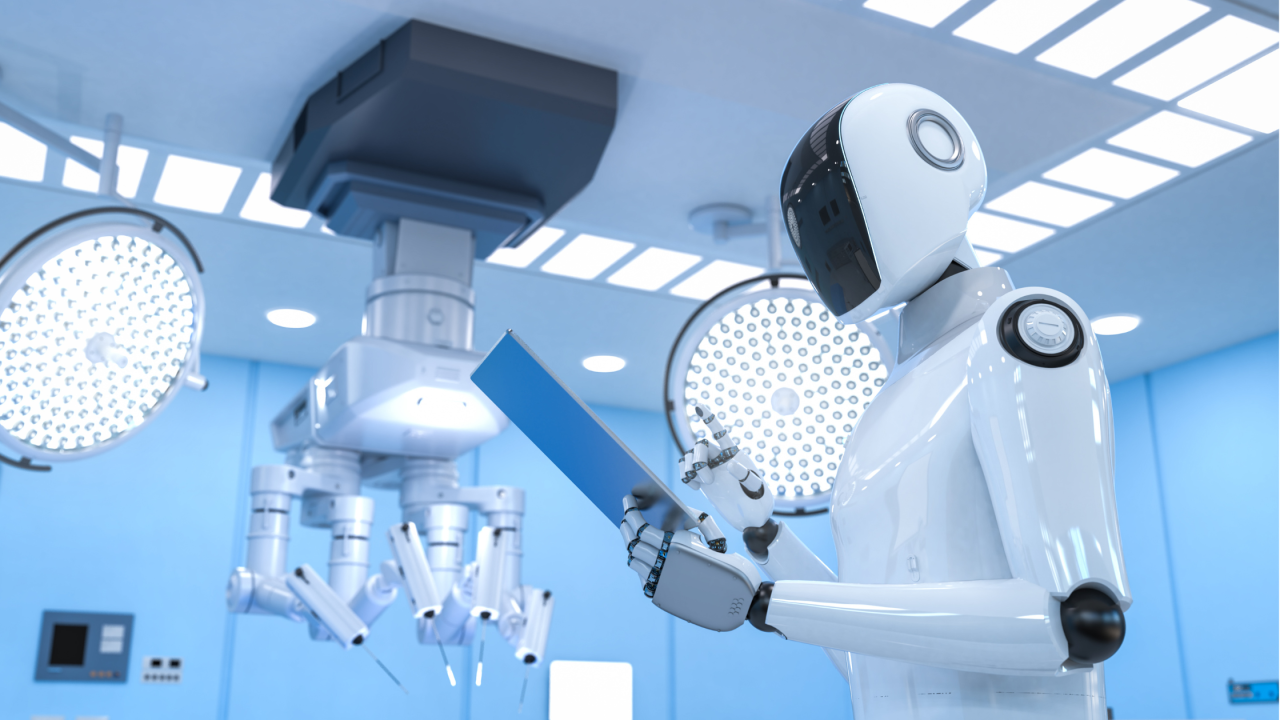
Robotic systems are traditionally associated with minimally invasive surgery, where they can help surgeons perform complex procedures with enhanced precision and control.
The next phase could be much broader.
According to Singh, future applications could extend to areas such as robotic medicine, robotic endocrinology and robotic cardiology, alongside diagnostic and therapeutic applications.
The idea is to view robotics not as a technology limited to surgery, but as a tool that can support healthcare delivery across different specialties.
AI, Robotics And Nanoscience Could Enable Precision Healthcare
The potential transformation is not being driven by robotics alone.
The combination of robotics with AI and nanoscience could allow healthcare systems to increasingly personalise decisions according to individual characteristics.
These could include:
- Genetic profile
- Environmental factors
- Lifestyle
- Dietary patterns
- Individual disease characteristics
This approach could strengthen the transition from a largely standardised model of treatment towards precision and personalised medicine, where two patients with the same diagnosis may receive increasingly tailored approaches.
Gene Sequencing Could Become More Scalable
Genomics is another area where robotics and AI could potentially play an important role.
Referring to the Genome India Programme, Singh said that around 10,000 individuals have already been sequenced and expressed the vision of eventually moving towards gene sequencing for every newborn.
Scaling genomic sequencing to India’s population of around 1.4 billion would require significant technological capacity. AI and robotics could potentially support the processing, automation and scalability needed for such large datasets and workflows.
However, translating genomic information into meaningful clinical decisions will also require strong data infrastructure, appropriate interpretation and responsible use of genetic information.
Tele Robotics Could Bring Specialists To Patients
One of the most interesting possibilities is the use of tele robotics to connect medical expertise across geographical boundaries.
Instead of requiring a patient to travel to a specialist, remote robotic technologies could eventually allow aspects of specialist care to reach the patient.
Singh highlighted his experience with remotely enabled robotic ultrasonography, including a demonstration involving a person located thousands of kilometres away in Antarctica.
The concept could be particularly relevant for a country like India, where specialist healthcare is concentrated in major cities while many patients live far from advanced medical centres.
From Patient Referral To Specialist Referral
The traditional healthcare model often requires patients to travel to where specialist expertise is available.
Tele robotics could potentially reverse part of that model.
The specialist could remain at a central facility while technology connects them to patients in remote locations. This could be particularly useful for selected diagnostic procedures, specialist assessments, emergency support and potentially other remote interventions.
India has already demonstrated the feasibility of tele robotic ultrasonography. A system developed through collaboration between AIIMS New Delhi, IIT Delhi and the National Centre for Polar and Ocean Research enabled real time ultrasound examination of a person at Maitri Station in Antarctica, more than 12,000 kilometres away.
Rural And Remote Healthcare Could Benefit
India’s geographical diversity makes remote healthcare technologies especially relevant.
A specialist may be located in Delhi, Mumbai, Bengaluru or another major medical centre while a patient may be hundreds or thousands of kilometres away.
Tele robotics could potentially support a hub and spoke healthcare model, allowing advanced expertise to be connected with smaller hospitals, rural centres, disaster zones and other locations where specialists may not be readily available.
The technology is therefore not only about automation. Its larger promise could be distribution of expertise.
Robotics Could Support A Changing Disease Landscape
India is dealing with a complex combination of infectious diseases, metabolic disorders and lifestyle related conditions.
At the same time, some diseases traditionally associated with older age are increasingly being seen among younger populations.
This changing disease profile creates demand for earlier detection, better monitoring and more personalised treatment.
Robotics and AI could become enabling technologies within this larger transformation, helping healthcare systems process information, support specialists and deliver care more efficiently.
The Technology Still Needs Strong Healthcare Systems
Robotics alone cannot transform healthcare.
Successful adoption will depend on several factors, including trained healthcare professionals, reliable connectivity, appropriate regulation, cybersecurity, data protection, clinical validation and affordability.
The technology must also complement clinical judgement rather than replace it.
For India, the real opportunity may therefore lie in combining advanced technology with its existing healthcare workforce and digital infrastructure.
India Could Build A New Healthcare Technology Ecosystem
India already has growing capabilities in artificial intelligence, biotechnology, digital health and medical technology.
The expanding use of robotics could connect these areas into a broader ecosystem.
Robotic systems could support diagnostics. AI could assist with interpretation and decision support. Genomics could provide deeper information about individual disease risk. Tele robotics could connect specialists with patients. Nanotechnology could contribute to new approaches in drug delivery and therapy.
Together, these technologies could create new models of precision healthcare.
The Future May Be More Than Robotic Surgery
India’s robotic healthcare journey is entering a broader phase.
The focus is gradually moving from robots assisting surgeons towards a much larger question: how can robotics, AI and other technologies help deliver healthcare more precisely and more widely?
The answer could involve applications in diagnostics, therapy, genomics, remote healthcare and personalised medicine.
The transformation will not happen simply by installing more machines. It will depend on developing the clinical expertise, infrastructure, research, regulation and digital connectivity needed to use these technologies responsibly.