Imagine detecting lung cancer with just a single breath no needles, no scans, no discomfort. Thanks to a groundbreaking innovation from researchers at the University of Texas at Dallas, that vision is quickly becoming reality.
A Revolution in Early Cancer Detection
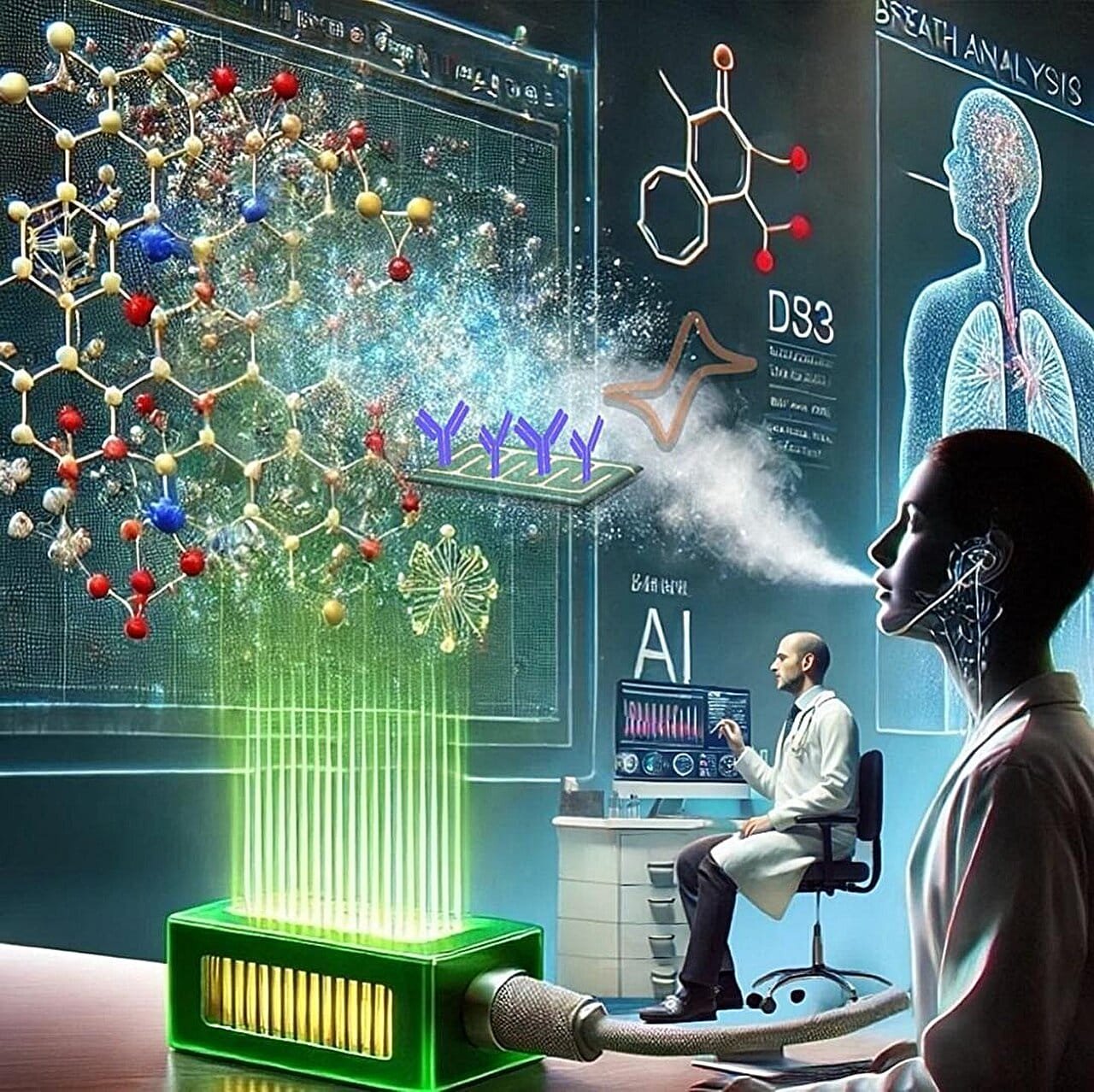
A team of scientists has developed a new biosensor technology capable of identifying volatile organic compounds (VOCs), tiny chemical markers in a person’s breath that can signal the presence of thoracic cancers, including lung and esophageal cancer.
In a recent clinical study involving 67 patients (30 of whom had confirmed cancer), this biosensor achieved an impressive 90% accuracy rate in detecting cancer cases. The device’s simplicity, speed, and affordability could redefine how we approach early cancer detection.
The Science Behind the Breath Test
The innovation stems from a rapidly growing field known as “breathomics.” This area of research focuses on how changes in our body’s chemistry, especially those linked to disease, can be detected through exhaled air.
The biosensor works by analyzing the breath for specific VOCs. When combined with artificial intelligence (AI), the system processes massive amounts of breath data to identify precise cancer-related chemical patterns that might otherwise go unnoticed.
Born from the Pandemic Built for the Future
Interestingly, this idea took root during the COVID-19 pandemic, when scientists were exploring noninvasive diagnostic methods using breath samples to detect viral infections. That same approach inspired researchers to adapt the technology for cancer detection, and the results are remarkable.
The project brings together experts from bioengineering, computer science, and clinical medicine, including teams from UT Dallas and UT Southwestern Medical Center, illustrating the power of interdisciplinary collaboration in medical innovation.
AI: The Hidden Hero
Artificial intelligence is at the heart of this technology. By training algorithms to recognize complex molecular “signatures” in the breath, AI enables the biosensor to quickly and accurately distinguish between healthy individuals and those showing early signs of cancer.
This fusion of AI and biosensing marks a major leap toward personalized, accessible, and preventive healthcare.
From Labs to Clinics: What’s Next?
Researchers envision a near future where this breath test could be part of routine health checkups, much like a blood test or blood pressure screening.
During a regular clinic visit, patients could simply breathe into a small handheld device and, within minutes, receive an initial assessment for possible early-stage lung or esophageal cancer. Such early detection could dramatically improve treatment outcomes and survival rates.
A Breath of Hope
This biosensor breakthrough has the potential to transform cancer screening, making it faster, safer, and easier for millions worldwide.
As the technology continues to evolve, it promises a future where “one breath” may be all it takes to save a life.
At The Doctorpreneur Academy, we help doctors build impact and authority using health education as a service.
✅ Final Takeaway
A world where detecting cancer is as simple as breathing, offering hope, convenience, and early intervention to everyone.
👉 To register for our next masterclass, please click here: https://linktr.ee/docpreneur