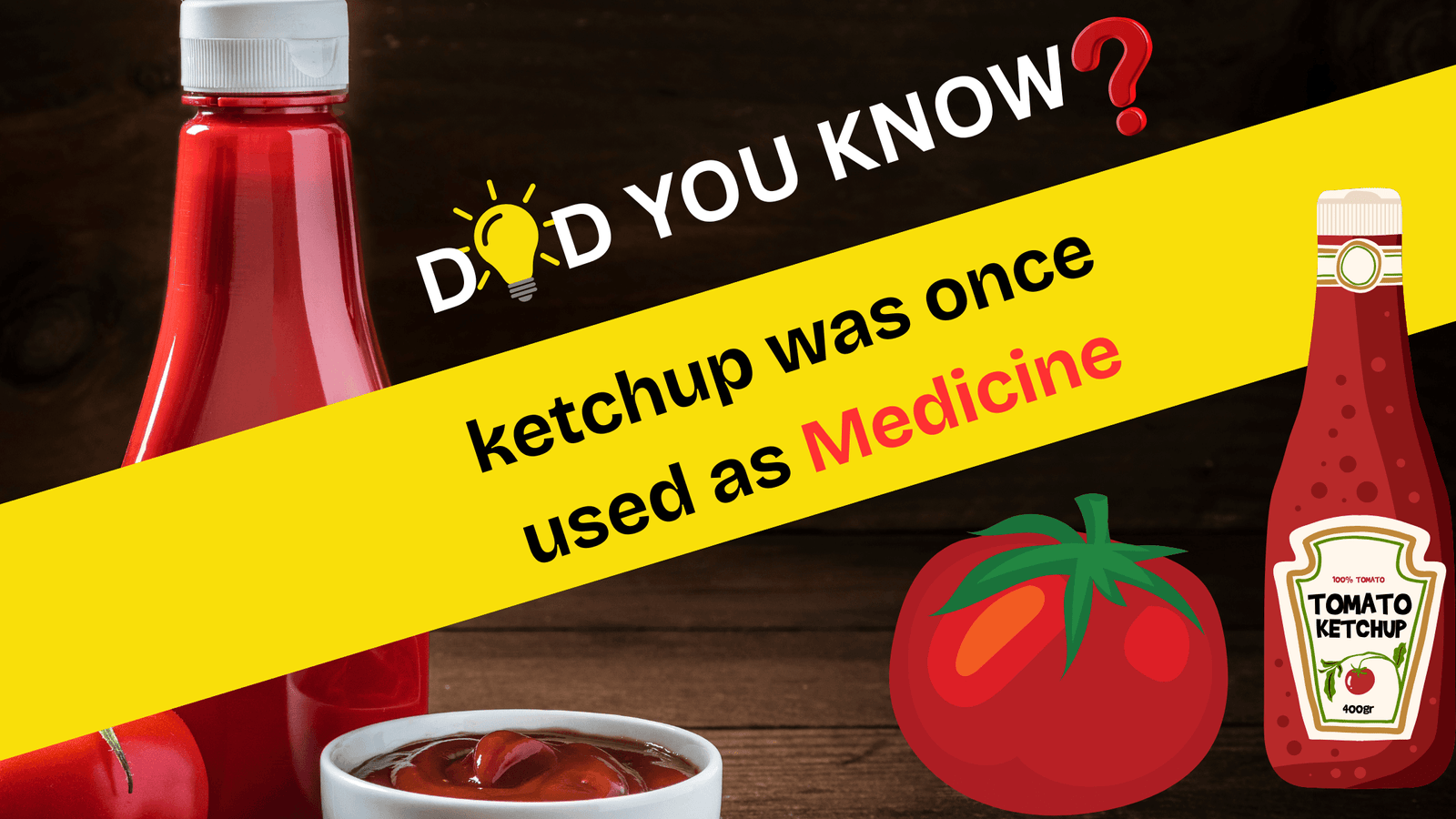
When we think of ketchup today, most of us imagine it on burgers, fries, or sandwiches. But few people know that ketchup’s history is as unusual as its taste. Believe it or not, this everyday condiment was once promoted as a medicine!
A Journey Through Time
- From Fish Sauce to Mushrooms: Ketchup originally started in ancient China as a fermented fish sauce. When it traveled to Europe, recipes changed—people made it with ingredients like mushrooms and walnuts.
- The Tomato Revolution: By the 1800s, tomatoes entered the picture. Strangely, tomatoes were once thought unsafe to eat. Over time, however, they became central to ketchup’s identity.
- Doctor’s Prescription: In the 1830s, an American doctor named John Cook Bennett claimed tomato ketchup could cure diarrhea, jaundice, and indigestion. He even sold “ketchup pills.”
- The Fall of the “Cure”: These medical claims didn’t last. Poor-quality products, lack of scientific proof, and exaggerated promises led to ketchup’s downfall as medicine.
- Heinz Steps In: In 1876, Henry Heinz introduced the ketchup we recognize today—safe, tasty, and marketed as food, not medicine.
Lessons for Healthcare Professionals
This strange story of ketchup holds powerful lessons for us in medicine and healthcare today:
- Medical Advice Changes With Time
What is promoted as a “cure” today may be discarded tomorrow. That’s why continuous learning and critical evaluation are vital. - Fads vs. Facts
Whether it’s “superfoods,” miracle supplements, or trendy diets, popularity should never replace science. Patients need guidance rooted in research, not hype. - The Fight Against Misinformation
In the 1800s, people believed in ketchup pills. In the 2020s, people fall for internet myths, miracle cures, and WhatsApp forwards. As healthcare professionals, it’s our responsibility to correct misinformation with empathy and clarity. - Why Evidence-Based Medicine Matters
Ketchup reminds us that without scientific testing and proof, even harmless products can be misused. Evidence-based medicine ensures treatments are safe, effective, and beneficial for real people.
Narratives such as the “ketchup cure” underscore the fragility of distinguishing between food, fads, and medicine. As doctors, entrepreneurs, and health leaders, we must:
- Encourage our patients to question health claims.
- Build awareness that science evolves—what’s true today might improve tomorrow.
- Lead by example in promoting evidence-based practices.
Final Word
The ketchup tale is not just a quirky history—it’s a warning. Misinformation, once spread, can mislead thousands. But with knowledge, awareness, and a strong commitment to truth, we can help patients make choices that are safe, real, and effective.
👉 Educate yourself and your community—because in healthcare, facts always taste better than fads.
👉 To learn more about how doctors can grow with the right tools, strategies, and evidence-based approaches, explore resources at The Doctorpreneur Academy.
👉To register for our next masterclass, please click here: https://linktr.ee/docpreneur