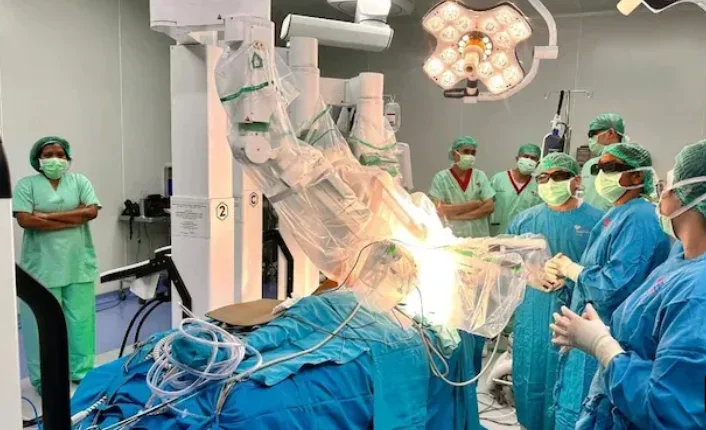
India is moving from early adoption to a broader ecosystem of robotic surgical expertise, advanced technology and remote care.
Robotic surgery is gaining significant momentum across India, with hospitals increasingly adopting robotic systems and surgeons performing a growing number of robotic assisted procedures. Delhi NCR has emerged as the country’s leading hub, while developments in telesurgery are opening new possibilities for specialist surgical care across geographical boundaries.
Delhi NCR Emerges as the Leading Robotic Surgery Hub
Delhi NCR currently has robotic systems installed across 39 hospitals, with 11 hospitals operating more than one robotic system. This concentration has positioned the region at the forefront of India’s robotic surgery expansion.
The growth in procedures has been particularly striking. Robotic assisted procedures in Delhi NCR increased from 2,257 in 2021 to 10,937 in 2025, representing almost a five fold increase in four years.
This expansion reflects not only greater investment in technology but also growing clinical experience among surgeons and healthcare institutions.
Robotic Surgery Is Expanding Across Specialities
The adoption of robotic technology is no longer limited to a single area of surgery.
In Delhi NCR during 2025, around 33% of robotic procedures were general surgery benign procedures, followed by urology at 30.2%, gynaecology at 22.1%, and general surgery malignant procedures at 10%.
Robotic procedures are also being performed in head and neck, thoracic and cardiac surgery, showing how the technology is becoming increasingly integrated across surgical disciplines.
India Sees Nearly Five Fold Growth in Robotic Procedures
The national numbers show that this is not simply a Delhi NCR phenomenon.
Across India, robotic assisted procedures increased from 8,912 in 2021 to 44,857 in 2025. This rapid rise indicates that robotic surgery is expanding beyond the country’s earliest adoption centres and becoming part of a wider healthcare technology ecosystem.
The shift also points towards an important change in surgical practice. Robotic technology is increasingly being viewed not simply as an advanced piece of equipment, but as a platform requiring trained surgeons, specialised teams, infrastructure and structured clinical experience.
From Robotic Surgery to Telesurgery
One of the most significant developments highlighted at the Society of Robotic Surgery India 2026 conference is the emergence of robotic telesurgery.
A recent procedure demonstrated the possibility of remotely connecting surgical expertise across large distances. Dr Anup Kumar performed a robotic telesurgery procedure remotely from Gurugram on a patient at a hospital in Hyderabad, covering more than 1,600 kilometres.
Another cross border demonstration involved surgeons in India remotely operating a robotic console in Chengdu, China, nearly 5,000 kilometres away, during pre clinical procedures.
These developments suggest a future where geographical distance may become less of a barrier to specialist surgical expertise.
What Telesurgery Could Mean for Tier 2 and Tier 3 Cities
India has a large and geographically diverse population, and access to highly specialised surgical expertise remains uneven.
Robotic telesurgery could eventually support remote surgical training, tele mentoring and specialist assistance for hospitals outside major metropolitan centres. However, experts have emphasised that this expansion will require appropriate clinical, regulatory and technological safeguards.
For Tier 2 and Tier 3 cities, the technology could potentially create new models of collaboration between local hospitals and specialist centres.
The objective would not simply be to place robotic systems everywhere, but to build connected healthcare networks where expertise, training and technology can be shared safely.
Cybersecurity and Regulation Will Become Critical
The expansion of remote robotic surgery also introduces challenges that traditional surgery does not face to the same extent.
Reliable connectivity, cybersecurity, surgeon training, credentialing, emergency preparedness and regulatory oversight will all become increasingly important as telesurgery develops.
International consensus recommendations published in the World Journal of Surgery in 2026 have addressed several of these requirements, highlighting that remote robotic surgery needs a comprehensive framework extending beyond the surgical technology itself.
Patient safety will remain the central consideration as healthcare systems explore increasingly connected operating rooms.
India’s Opportunity to Build Its Own Robotic Surgery Ecosystem
The rapid increase in robotic procedures presents an opportunity for India to move beyond simply importing advanced surgical technology.
Healthcare leaders are increasingly looking at innovation, artificial intelligence, digital health and surgical robotics as interconnected parts of the country’s future healthcare ecosystem.
The growth in procedure volumes can also contribute to a larger pool of experienced surgeons, specialised operating room teams, training programmes and clinical research.
As adoption expands, structured training and experience will be essential to ensure that technology is supported by the clinical expertise required to use it effectively.
The Road Ahead for Indian Healthcare
India’s robotic surgery journey is entering a new phase.
With 44,857 robotic assisted procedures nationally in 2025 and 10,937 procedures in Delhi NCR alone, the country is moving beyond early experimentation towards a broader ecosystem of robotic surgical practice.
The next stage could involve greater adoption across hospitals, wider speciality applications, remote mentoring and telesurgery, along with stronger integration of digital technologies.
But technology alone will not determine the success of this transformation. Skilled surgeons, trained teams, reliable infrastructure, patient safety, affordability, cybersecurity and appropriate regulation will be equally important.