A Positive Sign in Madhya Pradesh’s Measles Response
Madhya Pradesh’s Balaghat district has reported an encouraging development in its ongoing measles response, with no new measles cases recorded for seven consecutive days.
The improvement comes after an intensified public health response involving surveillance, vaccination, treatment, disease prevention and coordinated investigation across affected areas. Union health ministry officials said the Centre and Madhya Pradesh government have been working closely since a cluster of fever, fever with rash and associated deaths emerged in tribal habitations of Birsa block in July.
While seven days without a new case is encouraging, health authorities continue to monitor the situation closely, particularly among vulnerable tribal and Particularly Vulnerable Tribal Group communities.
A Multidisciplinary Response Was Mobilised
The response was strengthened through the deployment of a National Joint Outbreak Response Team on August 12.
The team brought together public health surveillance experts, the Immunisation Division and the National Centre for Vector Borne Diseases Control. An independent investigation team from the Indian Council of Medical Research also supported the response.
Teams from ICMR Jabalpur and Netaji Subhas Chandra Bose Medical College in Jabalpur have been visiting affected areas and providing technical support to state authorities.
This coordinated approach highlights an important principle in outbreak management. Containing infectious disease often requires more than vaccination alone. Surveillance, laboratory investigation, clinical care, epidemiology and community level intervention must work together.
Surveillance Expanded Across Nearly 50 Villages
One of the major changes in Balaghat has been the expansion of disease surveillance.
The monitoring network was initially focused on three villages but has now expanded to around 50 villages. More than 10 doctors and 10 community health officers have been deployed continuously for screening and treatment.
Six mobile medical units are also operating across Birsa and Baihar blocks, providing fever screening, outpatient care, maternal and child healthcare, tuberculosis screening, non communicable disease screening, diagnosis and medicines in remote tribal and PVTG communities.
This last mile approach is particularly important in areas where geographical barriers can delay access to healthcare.
More Than 32,000 People Medically Examined
The scale of the response has been substantial.
According to health ministry officials, 32,433 people have been medically examined so far. A total of 431 children were referred to and admitted to healthcare facilities.
Of these children, 379 have been treated and discharged, while 52 remain under treatment and observation.
These numbers demonstrate how outbreak response can simultaneously function as a broader healthcare intervention, identifying not only suspected infectious diseases but also nutritional problems and other medical conditions.
More Than 14,000 Children Receive Additional MR Vaccination
Vaccination has remained at the centre of the containment strategy.
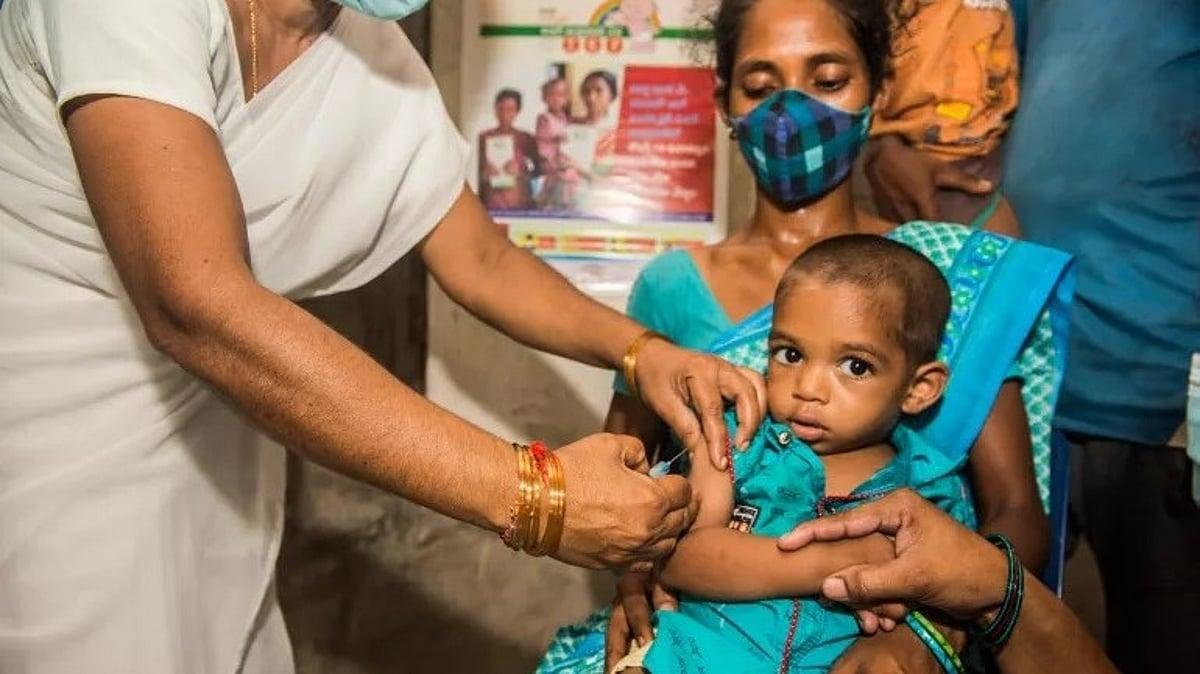
As part of the outbreak response immunisation campaign, 14,637 children between one and 10 years of age received an additional measles rubella vaccine dose, irrespective of their previous vaccination status.
The campaign demonstrates the importance of rapidly increasing immunisation coverage when measles transmission is suspected in a community.
Measles can spread rapidly, particularly among populations with gaps in vaccination coverage. Strengthening immunity during an outbreak can therefore become a critical component of containment.
The Response Goes Beyond Measles
One of the most significant aspects of the Balaghat response is that health authorities have not treated the situation as a single disease problem.
More than 600 drinking water sources have been purified. Insecticide spraying has been completed in 4,338 households, while fogging has been conducted in affected and adjoining areas.
Healthcare facilities have also been strengthened with additional beds, medicines, medical officers, laboratory support, infection prevention measures and isolation arrangements.
A temporary hospital at Kundekasa has also been providing treatment when required.
This broader approach is important because infectious disease outbreaks can interact with sanitation, nutrition, environmental exposure and limited healthcare access.
Child Malnutrition Emerges as a Major Concern
The investigation has also revealed significant nutritional challenges among children in the affected communities.
Screening identified 7,711 children with severe acute malnutrition. Of these, 518 required admission to nutrition rehabilitation centres.
Health teams also identified and managed 13,406 children with diarrhoea and 274 children with severe pneumonia. Children with suspected serious bacterial infections received specialised care.
These findings underline an important reality in public health: disease outbreaks often expose deeper vulnerabilities within communities.
Malnutrition can increase children’s vulnerability to infections and can complicate recovery, making nutrition support an essential part of outbreak response.
Understanding the Reported Deaths
Authorities are also conducting a case by case and retrospective review of reported deaths, including verbal autopsies and examination of available medical records.
The available evidence points to multiple clinical circumstances rather than a single cause. These include measles, malaria, measles malaria co infection, respiratory distress, dehydration, malnutrition, anaemia and shock.
Officials have therefore cautioned against attributing all reported deaths to a single pathogen without sufficient evidence.
This distinction is important for public health decision making. Accurate investigation is essential not only for understanding what happened but also for determining which interventions are needed to prevent further deaths.
More Than 1.5 Lakh Children Screened
The wider child health response has also reached a much larger population.
Under Dastak 2026, around 1.58 lakh children have been screened. The programme has included Vitamin A supplementation and other child health interventions.
Such large scale screening can help identify children who may otherwise remain outside the formal healthcare system, particularly in remote communities.
Seven Days Without a New Case Is Encouraging, But Vigilance Must Continue
The absence of new measles cases for seven days is an encouraging indicator that the intensified response may be helping contain transmission.
However, outbreak control cannot be considered complete simply because new cases temporarily stop appearing.
Continued surveillance, vaccination, early detection and rapid treatment remain essential, particularly in communities where access to healthcare is limited.
The Centre and Madhya Pradesh government have said that monitoring will continue with a focus on vulnerable tribal and PVTG populations, early detection, timely treatment, immunisation, disease prevention and last mile healthcare access.
The Bigger Lesson for Public Health
The Balaghat experience demonstrates that effective outbreak response requires more than treating individual patients.
It requires reaching communities before illness becomes severe, identifying cases quickly, strengthening vaccination coverage, improving water and environmental conditions, addressing malnutrition and ensuring that healthcare facilities are prepared to respond.
It also shows why disease surveillance needs to extend beyond easily accessible urban centres. Remote and vulnerable communities can face additional barriers that allow illness to progress before medical attention is received.