A New Step Toward More Precise Urological Diagnosis
Diagnosing bladder disorders can become particularly challenging when urinary symptoms are linked to neurological conditions. Understanding whether a problem originates in the bladder itself, the nervous system, or both often requires specialised diagnostic assessment.
Vardhman Mahavir Medical College and Safdarjung Hospital in New Delhi has strengthened its specialised diagnostic capabilities with the inauguration of a Centre for Advanced Bladder Diagnostics, along with new PET CT and SPECT CT facilities.
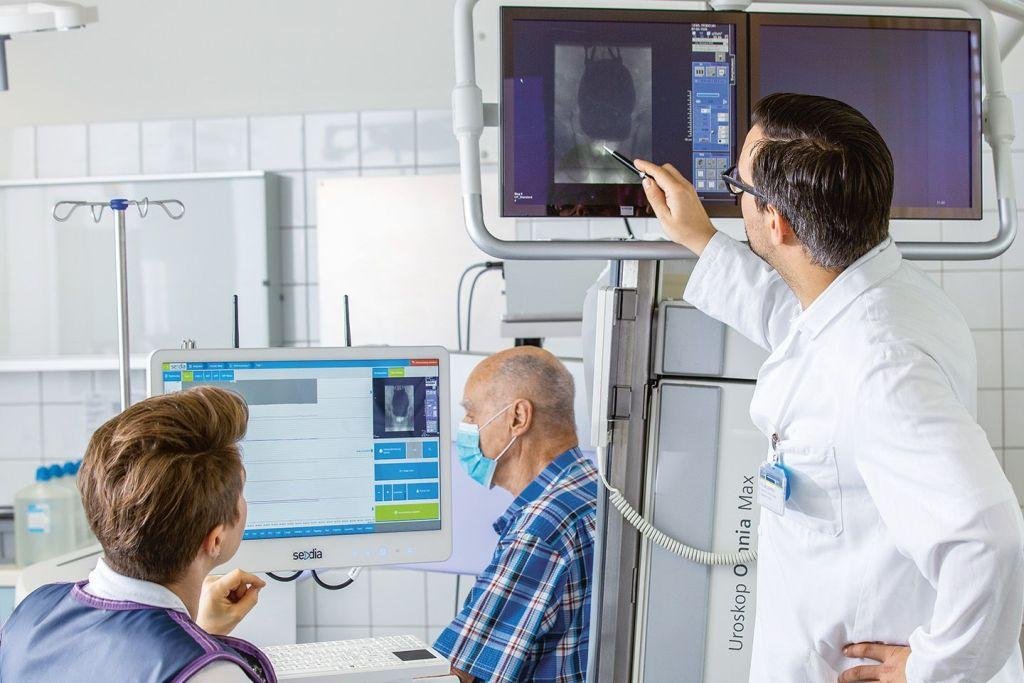
The new bladder centre combines Video Urodynamics with Near Infrared Spectroscopy based brain mapping, an approach described by the health ministry as being attempted for the first time in India.
The development is aimed at improving access to specialised diagnostics while keeping these services affordable for patients.
Understanding How the Bladder and Brain Work Together
The bladder does not function independently.
Urination involves a complex interaction between the bladder, spinal cord and brain. When neurological disorders affect this communication system, patients can develop problems with bladder storage, bladder emptying or urinary control.
The new diagnostic centre is designed to examine this relationship more closely.
Video Urodynamics can assess bladder function during filling and emptying, while Near Infrared Spectroscopy based brain mapping can monitor changes in cerebral blood oxygenation during the same process.
This combination could help clinicians understand whether a patient’s urinary disorder is primarily bladder related, neurological, or a combination of both.
What Is Video Urodynamics?
Video Urodynamics is a specialised investigation used to evaluate how the urinary bladder and lower urinary tract function.
It can provide clinicians with information about bladder pressure, storage, emptying and other functional characteristics.
This becomes particularly important in patients whose urinary symptoms may be associated with neurological conditions.
By combining functional bladder assessment with brain activity related measurements, the new centre aims to provide clinicians with a more comprehensive picture of complex urinary disorders.
Helping Patients With Complex Neurological Conditions
The new facility could be particularly valuable for patients whose bladder problems occur alongside neurological disorders.
Conditions affecting the nervous system can interfere with the normal coordination between the brain, spinal cord and bladder. In such cases, simply treating the urinary symptoms may not address the underlying problem.
A more detailed assessment could help doctors determine the nature of the dysfunction and guide more appropriate management.
The centre is expected to cater to approximately 5,000 patients annually, significantly strengthening access to specialised urological diagnostic services.
Advanced Nuclear Medicine Services Also Added
The hospital’s expansion is not limited to bladder diagnostics.
New PET CT and SPECT CT facilities have also been established under the Department of Nuclear Medicine.
PET CT combines metabolic imaging with anatomical imaging, while SPECT CT combines functional nuclear medicine imaging with CT based anatomical information.
Together, these technologies can provide clinicians with more detailed information for diagnosing and managing several complex diseases.
The newly established facilities are expected to strengthen diagnostic capabilities across areas including cancer care, cardiology, neurology, renal diseases and endocrinology.
SPECT CT Expands Diagnostic Capabilities
The SPECT CT facility will support diagnosis across several medical specialties, including cardiac, renal, endocrine, orthopaedic and gastrointestinal conditions.
This is important because nuclear medicine can provide information about how tissues and organs are functioning, rather than only showing their anatomical appearance.
Combining functional information with CT imaging can therefore help clinicians develop a more complete understanding of certain diseases.
The nuclear medicine services are expected to benefit approximately 600 to 700 patients annually and will be available at an affordable cost.
Making Advanced Diagnostics More Accessible
One of the most important aspects of the development is its location within a major government hospital.
Advanced diagnostic technologies are often expensive and concentrated in a limited number of specialised centres. Expanding such capabilities within public healthcare institutions can help more patients access high end diagnostics without having to depend entirely on private facilities.
For a large tertiary care hospital such as Safdarjung, strengthening diagnostic infrastructure can also support more coordinated care between different clinical departments.
Strengthening Medical Education and Training
The Centre for Advanced Bladder Diagnostics is also expected to contribute to postgraduate education and clinical training.
For medical students, residents and specialists, access to advanced diagnostic technology provides opportunities to develop expertise in increasingly complex areas of urology and functional bladder disorders.
This creates an important connection between patient care and medical education.
The development of specialised centres within teaching hospitals can help train the next generation of doctors while simultaneously improving services available to patients.
Moving Toward More Integrated Diagnosis
Modern healthcare increasingly depends on understanding diseases across multiple systems rather than treating each organ in isolation.
The bladder and nervous system are a good example of this interconnected approach.
By combining bladder function testing with brain related measurements, Safdarjung Hospital’s new centre represents a move toward more integrated assessment of complex urological disorders.
The addition of PET CT and SPECT CT further strengthens this broader diagnostic ecosystem by providing advanced functional and anatomical imaging capabilities.
What This Means for Indian Healthcare
The expansion at Safdarjung Hospital demonstrates how advanced diagnostic technologies can gradually become part of India’s public healthcare infrastructure.
The significance is not only the installation of new machines. It is the development of specialised clinical capabilities around those technologies.
When advanced diagnostics, trained specialists, medical education and affordable public healthcare come together, the impact can extend beyond individual patients.
It can improve early diagnosis, support more accurate clinical decisions and strengthen the country’s capacity to manage complex diseases.