A Technology Driven Approach to Maternal Healthcare
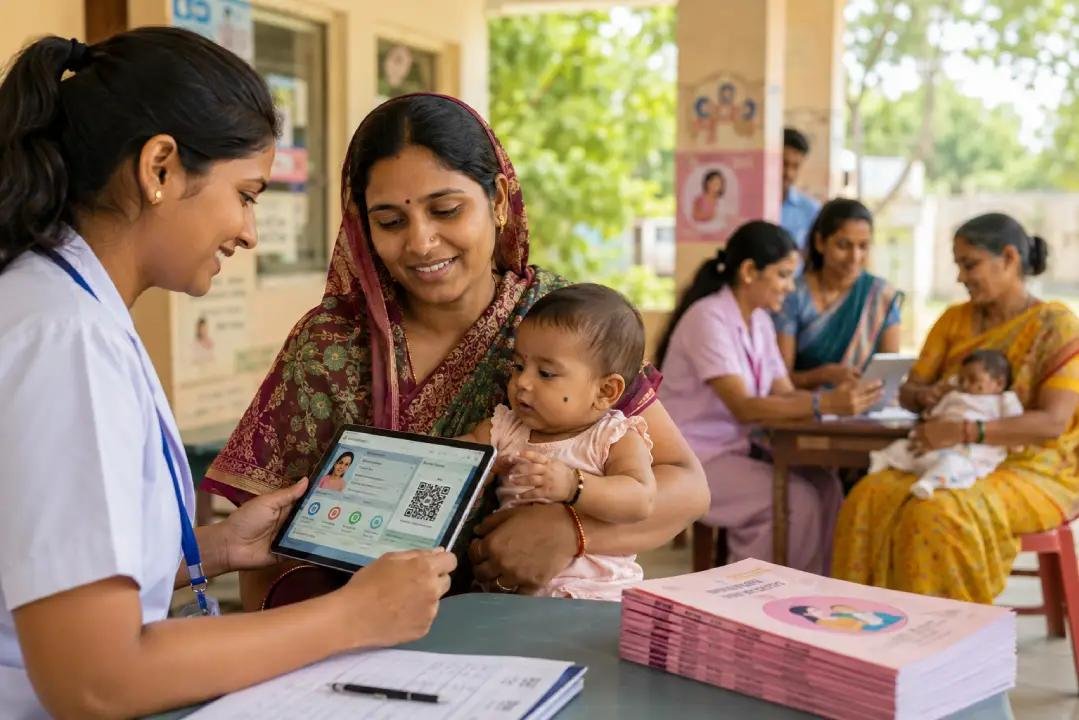
Haryana is introducing a technology driven system to digitally monitor every pregnant woman in the state, with the objective of reducing maternal and neonatal mortality and ensuring timely access to quality healthcare.
Chief Minister Nayab Singh Saini announced that the SAMRIDDHI portal will be used to track women’s health throughout pregnancy, during delivery and through the post partum period. The system will bring together digital records, healthcare alerts, referrals and follow up services.
One Digital Identity for Every Pregnancy
Under the initiative, every pregnant woman will be mandatorily registered on the SAMRIDDHI portal and provided with a unique SAMRIDDHI ID.
The pregnancy related health information will be maintained through this digital identity, including for women receiving care at government hospitals, private hospitals and medical colleges. This is designed to provide continuity of information even when a woman receives care at different healthcare facilities.
The approach could help reduce gaps caused by fragmented records and make it easier for healthcare professionals to understand a patient’s pregnancy history.
High Risk Pregnancies Get Special Attention
One of the most important features of SAMRIDDHI is its focus on early identification of high risk pregnancies.
The system will generate alerts for ANMs, doctors and health officials regarding required examinations, expected deliveries, follow ups and other services. Women identified as high risk will receive more frequent monitoring, while women with normal pregnancies will be contacted periodically. Monitoring will become more frequent as the expected delivery date approaches.
This creates a more proactive model of maternal healthcare, where potential risks can be identified before they become emergencies.
A 102 Maternal and Child Health Call Centre
The digital system will also be supported by a state level 102 Maternal and Child Health Call Centre.
Trained nurses will provide health related guidance, identify potential risks and help pregnant women reach appropriate healthcare facilities when required. If a high risk condition is identified through the call centre, the information will be shared with the command centre and updated on the SAMRIDDHI portal.
This combination of digital monitoring and human support is designed to ensure that technology remains connected to actual patient care.
Faster Referrals Could Save Critical Time
Timely referral is particularly important when a pregnancy develops complications that require specialised care.
Through SAMRIDDHI, district and state authorities will coordinate referrals of high risk pregnancies to appropriate healthcare institutions. Women will also be informed about suitable hospitals for delivery based on their health condition.
The government expects the system to streamline referrals and reduce delays in accessing higher level medical care.
A State Level Command Centre
A six seat SAMRIDDHI Command Centre will operate in two shifts under the National Health Mission.
The centre will monitor maternal and child health data, alerts, referrals and follow ups across Haryana. Dedicated nursing staff at the district level will also strengthen monitoring and coordination.
This creates a centralised mechanism through which health authorities can identify cases requiring attention and track whether necessary follow up has taken place.
Connecting Maternal and Child Health
The initiative is designed to extend beyond pregnancy.
The SAMRIDDHI portal will be developed in accordance with Ayushman Bharat Digital Mission standards and integrated with other health portals. Birth registration will also be linked with the SAMRIDDHI ID, allowing the system to support monitoring of the child’s health after birth.
This could create a more continuous healthcare journey from pregnancy through childbirth and early childhood.
Beyond Data Collection
The larger significance of the initiative lies in how healthcare data is used.
The objective, according to the Haryana government, is not simply to collect information about pregnant women. The system is intended to turn that information into alerts, follow ups, referrals and timely healthcare interventions.
If implemented effectively, this could help healthcare workers identify women who need additional attention and ensure that important appointments and referrals are not missed.
What This Could Mean for Maternal Healthcare
SAMRIDDHI represents a shift toward a more proactive and coordinated maternal healthcare model.
Instead of waiting for complications to bring patients into the healthcare system, digital monitoring can help healthcare teams identify risks earlier, maintain continuity of information and coordinate care across different levels of the health system.
For a state seeking to reduce maternal and neonatal mortality, stronger digital coordination could become an important component of preventive and emergency maternal care.