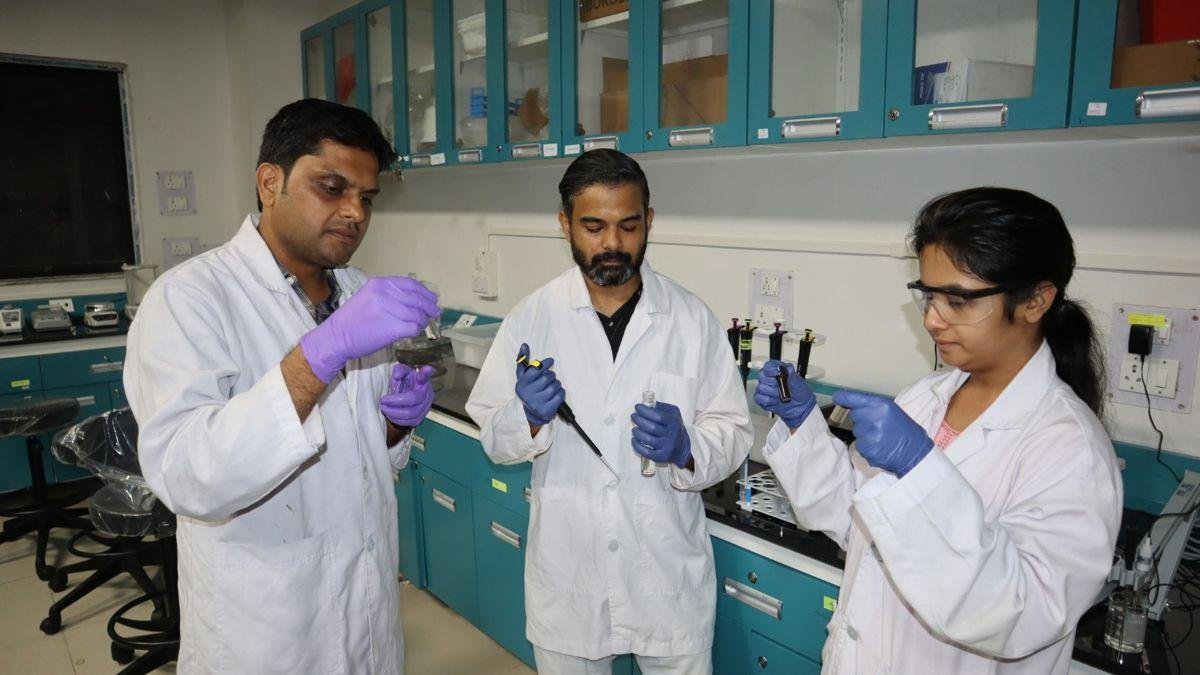
A New Approach to Water Safety
Researchers at IIT Guwahati have developed E Eye, a portable optical sensing device designed to rapidly detect multiple toxicants in water and other biological samples. The innovation addresses an important public health challenge: monitoring water quality at the source, particularly in locations where conventional laboratory testing may be difficult or expensive.
The technology aligns with the Jal Jeevan Mission, where ensuring the quality of drinking water is as important as expanding access to tap water.
How E Eye Works
E Eye functions like an electronic eye. A chemical reaction produces a coloured compound, and the intensity of that colour corresponds to the concentration of the toxicant present in the sample.
The device uses optical principles to analyse the sample and converts the results into digital data, allowing the concentration to be displayed directly. It can also transmit recorded information wirelessly to water treatment facilities.
What Can It Detect?
Laboratory testing showed that E Eye can detect several potentially harmful contaminants, including arsenic, lead, iron, chromium and fluoride, along with Escherichia coli bacteria.
These capabilities could make the device useful for rapid screening of water sources and identifying potential contamination before it becomes a larger public health concern.
Affordable Testing at the Source
One of the most notable features of E Eye is its low cost. The device has been developed at an estimated cost of ₹3,500, with testing costing around ₹2 per sample.
The researchers believe the cost could fall further with large scale manufacturing, potentially making the technology more accessible for field based monitoring in rural and remote areas.
Tested Across More Than 2,700 Samples
The research team has tested E Eye on more than 2,700 samples and reported accurate results. In laboratory comparisons, its readings were found to be comparable with established instruments such as UV Visible spectrophotometers and Atomic Absorption Spectrophotometers.
This combination of portability, affordability and digital connectivity could make rapid screening more practical outside conventional laboratories.
Applications Beyond Water Testing
The potential applications of E Eye extend beyond drinking water. The researchers report that the device can also analyse samples from food products, vegetables, tea, herbal products, soil, milk, environmental samples and biological samples.
It could support government agencies, industries, food manufacturers and environmental monitoring teams in identifying contaminants and strengthening safety checks.
From Research to Real World Use
With support from the Ministry of Electronics and Information Technology, the research team has established ENVIONIX Labs Pvt Ltd to commercialise the technology.
The team is also exploring industry partnerships for technology transfer. Future development plans include integrating solar power and cloud connectivity, which could enable remote monitoring and centralized data management.
Why This Matters for Public Health
Contaminated water can expose communities to harmful chemicals and disease causing microorganisms. Faster detection can help authorities identify problems earlier and take corrective action.
A portable and affordable testing platform could therefore strengthen environmental surveillance, support safer water management and improve access to testing in areas where sophisticated laboratory infrastructure is limited.