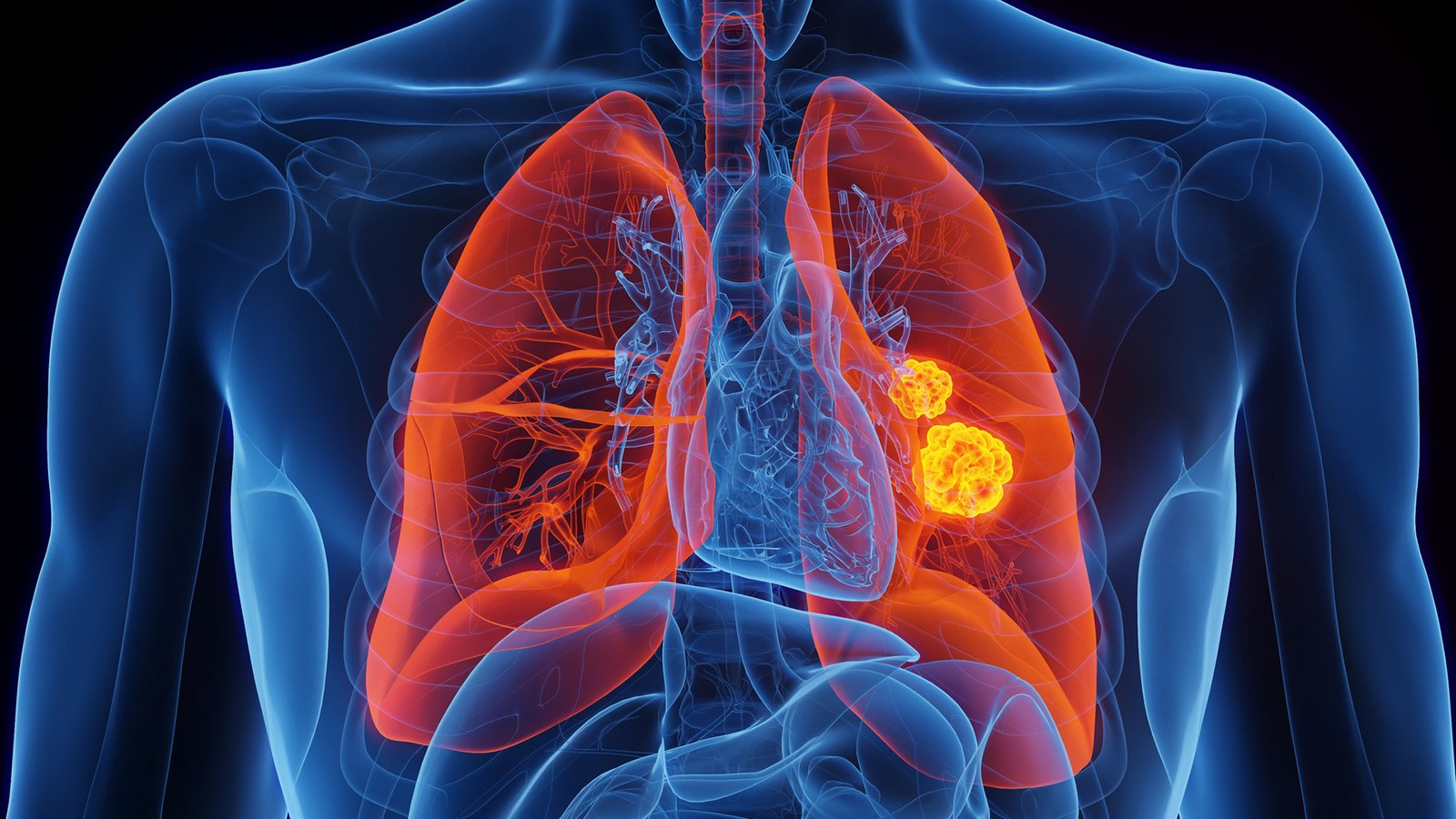
Rare Inherited Mutation Linked to Much Higher Lung Cancer Risk
Lung cancer is commonly associated with smoking, but a significant number of people who have never smoked also develop the disease.
A new study has identified a rare inherited mutation in the EGFR gene that appears to substantially increase lung cancer risk, including among people who have never smoked. Researchers analysed genetic and health information from more than 3.3 million people in the 23andMe database.
The finding could eventually influence how doctors identify people who may benefit from earlier or more targeted lung cancer screening.
The Mutation Behind the Finding
The researchers focused on a rare EGFR mutation known as EGFR T790M.
EGFR plays an important role in regulating cell growth, division and survival. The T790M variant has previously been identified in families with unusually high rates of lung cancer, but its rarity made it difficult to accurately quantify the associated risk.
The new analysis provided researchers with a much larger population in which to study the mutation.
What Did Researchers Find?
The study found that people carrying the EGFR T790M mutation had an approximately 25 fold higher overall risk of lung cancer compared with people who did not carry the mutation.
The association was particularly strong among people who had never smoked.
Among never smokers carrying the mutation, researchers reported that the odds of developing lung cancer were more than 60 times higher than among never smokers without the mutation.
These figures describe an association observed in the study. They do not mean that every person carrying the mutation will develop lung cancer.
The Mutation Also Matters Among Smokers
The genetic association was not limited to people who had never smoked.
Among smokers, carriers of EGFR T790M had approximately 10 times higher odds of lung cancer than smokers without the mutation, according to the study report.
This suggests that inherited genetic susceptibility and environmental exposure can both contribute to lung cancer risk.
The findings therefore add another layer to the traditional understanding of lung cancer risk.
Why This Is Important for Nonsmokers
Lung cancer screening has historically focused heavily on smoking history.
This can make identifying high risk nonsmokers more challenging because they may not meet conventional criteria for screening.
Study leader Dr. Jaclyn LoPiccolo of Dana Farber Cancer Institute said the findings raise the possibility that future screening could also take inherited genetic risk into account.
However, this does not mean that genetic screening for EGFR T790M should automatically become routine for everyone.
Further research is needed to determine how genetic testing and earlier screening should be incorporated into clinical practice.
A Rare Mutation With a Strong Effect
One of the interesting aspects of this discovery is that the mutation itself is rare.
The researchers were able to study it at scale because their analysis included more than 3.3 million people. This allowed them to identify 641 carriers and examine the relationship between the mutation and lung cancer risk.
Large genetic databases can therefore help researchers investigate rare variants that would be difficult to study using traditional smaller cohorts.
Could Family History Become More Important?
The findings may be particularly relevant for families with multiple cases of lung cancer despite little or no smoking history.
EGFR T790M was first identified in 2005 in a European family with several cases of lung cancer and has subsequently been identified in other families with unusually high rates of the disease.
This raises an important clinical question: could genetic testing eventually help identify families who need a different approach to lung cancer surveillance?
That possibility will require further validation before it becomes part of standard screening practice.
The Mutation Was Not Linked to Other Common Cancers
Researchers also examined the relationship between the variant and 17 other common cancers.
The study did not find the same association across those cancers, suggesting that the effect of EGFR T790M may be relatively specific to lung cancer.
This makes the finding particularly interesting from a cancer genetics perspective.
What This Could Mean for Future Screening
Current lung cancer screening strategies generally rely heavily on factors such as age and smoking exposure.
The new findings raise the possibility of a more personalised approach in which genetic risk could eventually become another factor considered when assessing an individual’s screening needs.
Such an approach could potentially identify certain high risk people who might otherwise be missed.
But researchers still need to establish whether earlier and more frequent screening actually improves outcomes for people carrying EGFR T790M.
Genetics Is Only One Piece of the Puzzle
The study should not be interpreted as suggesting that genetics explains all lung cancer in nonsmokers.
Lung cancer is a complex disease influenced by multiple genetic, environmental and biological factors.
Other possible contributors include exposure to secondhand smoke, air pollution, occupational exposures and other environmental factors.
The new finding identifies one particularly strong inherited risk factor, but it does not provide a complete explanation for lung cancer among people who have never smoked.
From Genetic Discovery to Clinical Practice
The next step is determining how this discovery can be translated into patient care.
Researchers are already exploring whether people with the mutation could benefit from earlier or more frequent lung cancer screening. Clinical studies will be important in establishing whether such an approach provides meaningful benefits.
Genetic discoveries become clinically useful only when they can be reliably identified, appropriately interpreted and connected to interventions that improve patient outcomes.